Repair vs. Replace: When Does a Parquet Floor Need a Full Re-Floor?
This is the question we get asked most directly, usually by someone who's already had a flooring salesperson recommend tearing everything out. The honest answer is that a full re-floor is the right call far less often than it's suggested.
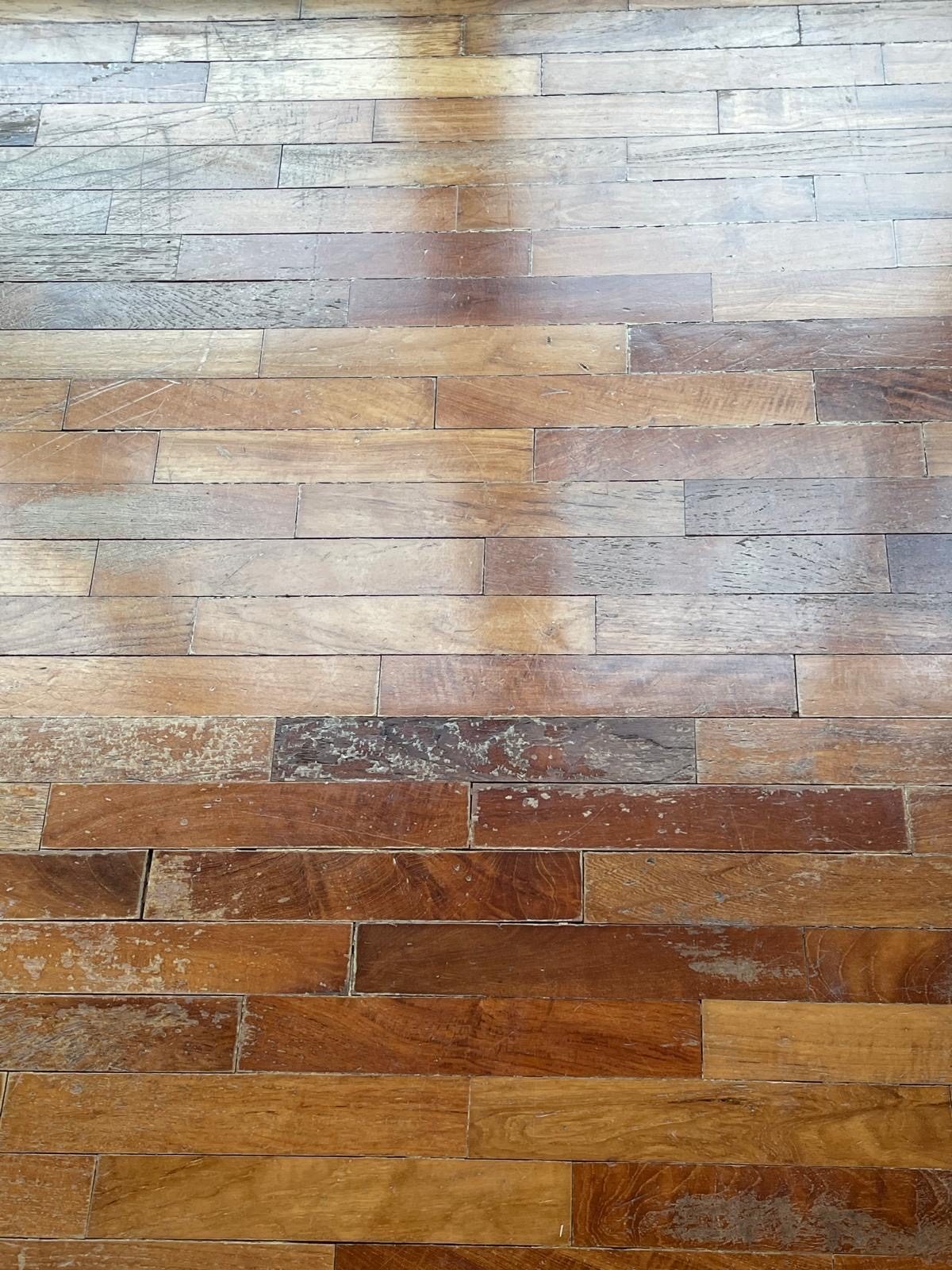
Repair is usually enough when...
Damage is limited to a handful of blocks or one section, the subfloor underneath is solid once you lift the affected boards, and the rest of the floor is in reasonable condition. This covers the large majority of jobs we see — most parquet floors fail in specific spots, not uniformly.
A full re-floor makes more sense when...
Damage is spread across most of the floor rather than concentrated in one area, the subfloor itself has widespread rot or moisture issues that go beyond what a local repair can fix, or the existing timber species is no longer available to match at all — even approximately.
The cost gap is bigger than people expect
A full re-floor typically costs several times more than even a substantial repair, and takes the room out of use for a week or more rather than a day or two. For most budgets, that gap alone is worth exploring the repair option first.
Get an honest opinion before committing either way
We tell customers plainly which category their floor falls into, including cases where we think a repair genuinely won't hold. A repair-first approach saves money in the large majority of cases we see — but it's not the right call for every floor, and we'll say so when it isn't.
If you've been quoted for a full re-floor and aren't sure whether it's actually necessary, a second opinion costs nothing and often changes the answer — see our pricing guide for what a repair-first approach typically costs by comparison.